 Anita Valentinova
You bought the van, insured it, spent more than you planned on the conversion and photographed it on a good morning. Now you are sitting on an asset that costs you money every month it does not move, and the question nobody answered for you is where the first booking actually comes from.
Most of what you will read on this subject was written by somebody who has never handed over a set of keys at seven in the morning. It says build a website, use social media, do SEO and provide great customer service, which is true in the way that "score more goals" is true. This is the version I would give another operator over a beer, with the numbers I would actually use.
The short version is that you do not need every channel. You need to get in front of people who already want a campervan, look like a real business to somebody who has never heard of you, and make the booking easy enough to finish on a phone at eleven at night. Everything below serves one of those three, and the order matters more than the tactics.
The chain every booking has to pass through
Acquisition looks like a list of channels. It behaves like a chain.
Somebody searches for a campervan in your city and finds you. They look at the van and quietly decide whether the business behind it is real or a bloke with a Transit. They check whether it is free on their dates and what it costs, then work out the deposit, the mileage and what happens if they hit a bollard. Only then do they book, or message you and wait.
Break any one of those links and the whole channel looks dead from outside. Nine times out of ten, when an operator tells me a channel does not work, the channel worked fine and something downstream ate the booking. The marketplace sent forty people to a listing with four photos and no floorplan. The ads sent traffic to a page that would not say what the deposit was. The enquiry arrived on Saturday and got answered on Monday, by which point they had booked the van in Fuengirola.
So work out which link failed before you replace a channel. Otherwise you spend a year swapping perfectly good channels for worse ones and calling it marketing.
Marketplaces: the fastest route to a first booking
Travellers do not know which rental companies operate in Málaga, Inverness or Porto, and they are not going to research fifteen websites to find out. They open one marketplace, filter by dates and berths, and compare what comes back.
For a business with no reviews and no audience, that is the fastest route to a first booking that exists. You borrow somebody else's demand, payment system, rental agreement, insurance structure and review mechanism, and you pay nothing until a booking completes. In season you can see enquiries within days of going live.
What each platform charges, and who pays it

Fee structures vary far more than people admit, and the difference between a fee charged to you and one charged to the traveller changes how you price. Check the current terms before committing, because these numbers move.
In Europe, Yescapa and Goboony now sit under the same owner and between them cover France, Spain, Germany, the Netherlands and the UK. Yescapa charges most of its fee to the traveller as a service fee of up to around 15% of the hire, varying with the cost of the rental and where the vehicle is registered. If you are a registered business rather than somebody renting out a personal van, say so when you sign up, because the insurance and contract handling differ from the private-owner route and discovering that difference during a claim is a bad afternoon.
Camplify splits its charge across both sides, which catches people out. In the UK the owner pays a listing commission that varies by membership tier, while the hirer pays a booking fee on top of the stay price, currently around 12% plus VAT. Indie Campers runs a hybrid, mixing its own fleet with marketplace listings, and it has a route specifically for professional fleet owners with identity checks and card payments, though it does not publish a headline commission. In North America, Outdoorsy is the most transparent of the lot, publishing a host fee that starts at 25% for new hosts and drops to 22% and then 20% as your trailing twelve-month booking value passes twenty and thirty-five thousand dollars. RVshare charges both sides without publishing one clean number.
Two things there matter more than the percentage. A fee charged to the traveller is not free money for you, because it still lands on the total at checkout and still competes against the operator whose all-in number looks lower. And several European platforms now actively want professional operators rather than only private owners, so if you run three vans as a business, list as one.
How to choose two platforms
Two done properly beats five half-finished, every time. More importantly, you cannot hand-manage five calendars through August without eventually selling the same van twice, and one double-booking costs you more than a month of marketing buys back.
Pick them on three questions. Does the platform have real traveller demand in your pickup city, which you check by searching your own city as a customer and counting how many vans come back and how many carry reviews from this year. Does the fee structure suit your price point, because a percentage charged to the traveller bites harder at the premium end. And will they take you as a business without pushing you into a private-owner insurance product that does not match how you operate.
A thin marketplace in your city is not the bargain it looks like. Twelve competing vans means travellers are searching there. Two vans and no recent reviews means nobody is, and you will be the only listing in a room with no customers.
The real cost of renting through a platform
The costs that never appear on an invoice matter more than the commission. You compete on a grid where photos and price do almost all the work. You never own the customer. And if the platform changes its ranking rules or its fee tiers, your revenue changes with it and nobody asks your opinion first.
So use marketplaces as an acquisition channel while you build direct demand underneath, and stay inside their terms while you do it. Never try to move a marketplace booking off-platform. They detect it, it voids the insurance the traveller believes they have, and it costs you the listing at the worst possible time of year.
The legitimate version of reducing dependence is slower and works better. Give every customer a rental that is genuinely good. Put your own branded welcome pack in the van. Ask for the review on the platform that earned the booking. Make sure that when that customer searches your business name next February, they land on your own site with your own prices and no commission attached. None of that touches the platform's booking, and all of it compounds.
Listing setup: photos, floorplan and policies
Photos first, and the bar is lower than you would hope. Marketplace data consistently shows conversion falling away below about six unique photos, so treat six as a floor rather than a target. Twenty is better. Include a floorplan or a layout diagram, because listings with one get meaningfully more enquiries, and the reason is obvious once you picture the person looking, who is trying to work out where two adults and a seven-year-old are going to sleep.
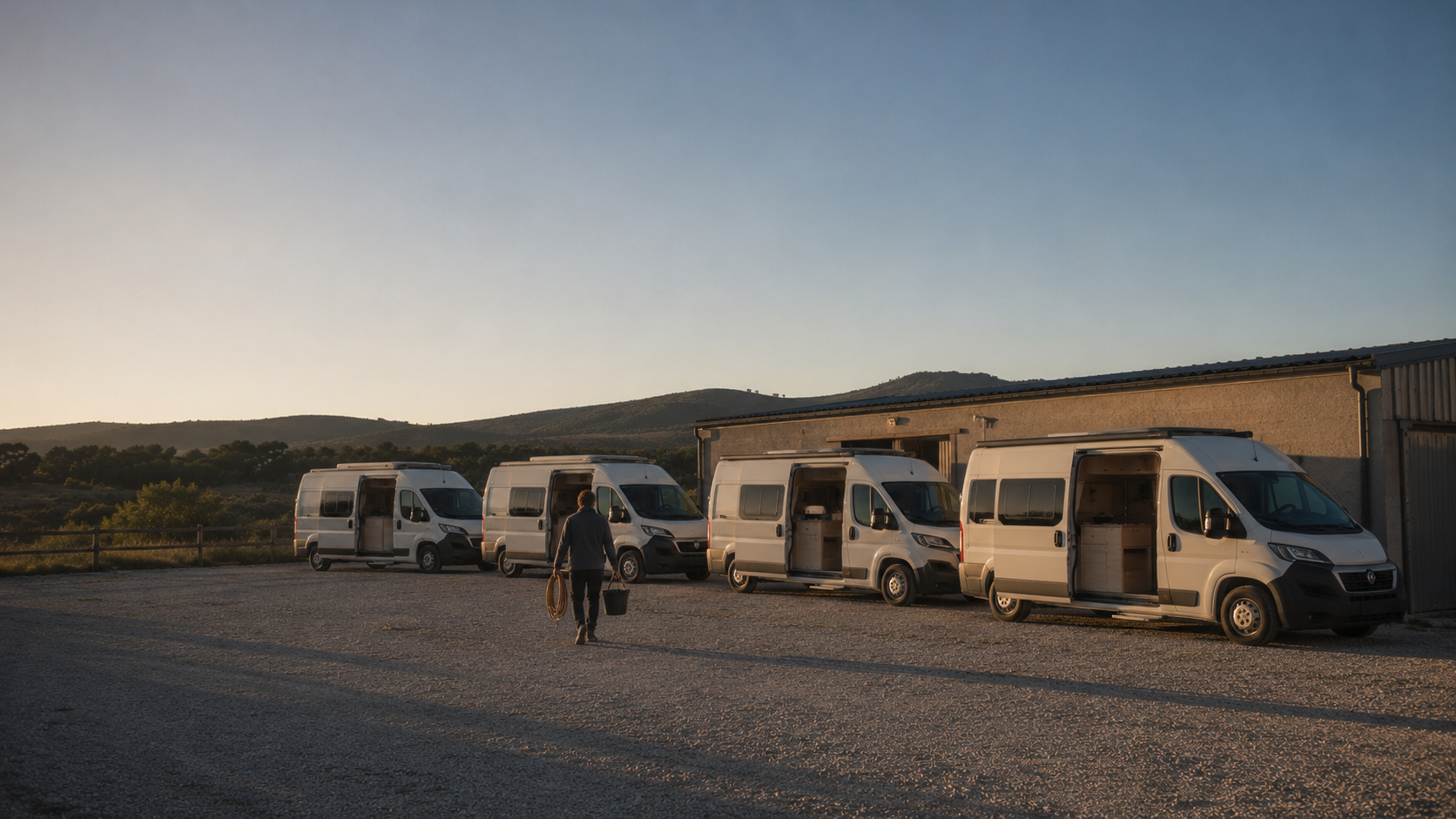
Shoot them properly, which takes one morning and pays for years. Park somewhere plain, ideally a gravel or tarmac area with no other vehicles in shot, and shoot in the hour after sunrise or before sunset when nothing blows out. Exterior from three quarters front, three quarters rear and side on, with the door open. Interior with every curtain and window open, because dark van interiors photograph like caves. Then the bed made up with actual bedding, the kitchen with a pan on the hob, the fridge open, the storage open, the toilet or shower if you have one, the driving position, and one shot with a person in it for scale. Skip the sunset silhouette. Every listing has one and none of them answer a question.
Put your face on the listing too. Host profile photos and a written personal description lift enquiry rates significantly, because a faceless company page converts worse than a named human being who clearly owns the thing.
Then the policy decisions that quietly filter your market. Pet-friendly filters get applied in roughly a third of searches while barely half of listings allow pets, which makes it the cheapest demand available to you if you can live with a washable floor and a lint roller. Three nights is the most common search length, so a four-night minimum removes you from the biggest slice of the market before anyone sees your photos. Unlimited mileage is offered by under a tenth of drivable vehicles, so pricing kilometres into the daily rate makes you one of the few vans nobody has to do arithmetic about. And delivery pricing moves conversion more than people expect, so a lower delivery minimum usually earns back more than it costs.
Judge a new listing on views and enquiries, never on bookings, because bookings are too rare in month one to mean anything. Views with no enquiries means the listing is failing. No views at all means your price or your calendar is the problem, and it is usually the calendar, because half-blocked availability kills you in search filters.
Pricing your first rentals
New operators price by copying the cheapest van in their city. That single decision quietly determines whether the business works, because cheap fills a calendar and a full calendar at the wrong price is an exhausting way to lose money.
Start from your own numbers. Work out what the van costs every month whether it moves or not: finance or depreciation, insurance, road tax, storage or parking, breakdown cover, software, accounting. Then what each rental costs on top: cleaning, gas, laundry, consumables, payment fees, the diesel you burn on delivery, and a real maintenance allowance. That last one is where everybody lies to themselves. A van doing sixty rentals a year eats tyres, brakes, a habitation service, a fridge, a water pump and a leisure battery on a schedule that a privately owned van never sees.
Then do the arithmetic that matters, which is nights sold rather than day rate. Say the van costs you €900 a month to exist and €60 per rental to turn around, and you want €1,500 a month gross in season. At €110 a night with an average booking of five nights, three bookings a month gets you there. That is a target you can act on. A day rate you copied from a competitor is not.
Three pricing rules for year one
Never build a rate card on peak alone. A price that works in August leaves the van still in May. Run at least three bands, and if you want a starting shape, low season at roughly 55 to 65% of your August rate, shoulder at 75 to 85%, peak at full, with school holidays and bank holidays priced as peak regardless of month. Publish all of it, because the people booking in February are exactly the people you want.
Never discount the nightly rate to win a booking. Add value instead. A free second driver, included bedding, a late return or a free extra day on a Sunday collection costs you far less than €20 a night off a rate you then have to defend to everyone who saw it. Discounting also trains your first reviewers to call you cheap rather than good, and that is very hard to undo.
Use length-of-stay pricing rather than a hard minimum wherever you can. A modest per-night reduction from five nights and again from ten earns you longer bookings without locking out the three-night searches that make up the largest share of demand.
An introductory rate for your first ten rentals is fine and normal. Give it a published end date so it reads as a launch offer rather than your real price, and make sure it still covers cleaning, gas, insurance and the wear you are about to discover.
Booking lead times: when to be visible
Campervan demand is seasonal. The booking decision is not, and this catches out almost every new operator.
Across Europe, campervan and motorhome trips get booked a long way ahead. Spanish travellers average somewhere around fifteen weeks before departure, Britons about fourteen, Germans and Dutch travellers closer to five months. Average trip length runs to a week and a half. In the US the pattern is the same shape, with peak summer dates filling two months or more in advance.
Three things follow. Your August calendar is decided in April and May, so a listing that goes live in July is fighting over scraps. Long lead times reward operators who take deposits cleanly and hold dates without argument, because somebody is committing real money to a trip four months out and any wobble in your process reads as risk. And if your demand skews foreign, check the lead time of the countries you actually attract, since a German family planning in February and a British couple planning in May give you two different marketing calendars.
Off-season demand: long stays and non-holiday renters

Most new operators treat the off season as dead time and spend it worrying about the finance payment. Those gaps are the cheapest experiments you will ever run, and the operators who survive their second winter are the ones who found something to put in them.
Sell longer stays rather than more of them. The person who wants a van for three weeks in November is competing with nobody, weekly and monthly rates that look generous in low season still beat an empty parking space, and one four-week booking costs you a single turnaround instead of six.
Then go looking for the demand in your city that has nothing to do with holidays. Festival and event crews need a week of accommodation and cannot get hotel rooms. Film and photo production companies rent vans as unit accommodation and as props, and they pay properly and book midweek. People between houses need somewhere to live for three weeks during a move. Contractors working away from home have the same problem every month. Anyone seriously thinking about buying a campervan will happily pay to try one first, and you can advertise that honestly as exactly what it is. Rural weddings, sports events and film school shoots all produce the same shape of demand, which is midweek, off season and completely indifferent to your Instagram feed.
None of it will carry the business. It fills weeks that would otherwise earn nothing, and it tells you which segments respond, which in year one is worth as much as the money.
Local search: getting found in your pickup city
Somebody typing campervan hire Málaga September has picked a destination, roughly picked dates and started choosing a supplier. Somebody scrolling past a sunset van photo has done none of those things. Local search is the highest-intent free channel you have and the one most operators set up wrong.
Google Business Profile setup without a storefront
Most new operators keep the vans in a yard, a rented parking space or a driveway, which is exactly where Google's rules get strict.
If customers come to you and you have permanent signage with your business name on it, use the address. If there is no signage, or you deliver the van and meet people elsewhere, register as a service-area business and hide the address, because that is what Google expects and displaying an unsigned residential address is the most common way small operators get suspended. Keep the service area realistic while you are at it, since Google's guidance is that it should not stretch much beyond about two hours' driving from your base.
Three more rules catch people out. One profile for the business, because creating a profile for every city you would like to rank in will eventually cost you the one that works. No keywords in the name, so Costa Sol Campers is fine and Costa Sol Campers Campervan Hire Málaga Airport is a suspension waiting to happen. And if you operate from an airport, a separate profile is only permitted where pickup and drop-off genuinely happen at different locations.
Profile settings most operators skip
Verification takes a couple of weeks and almost everybody stops there, which wastes the best free asset in the plan.
Pick the most specific category you can find rather than a generic vehicle rental label, then add secondary categories for what you genuinely offer. Upload real photos of your actual vans, inside and out, and keep adding them through the season, because a profile that gains photos looks alive and one that froze in March looks abandoned. Set hours that match when somebody can actually reach you, since claiming Sunday opening that nobody answers earns exactly the review you would expect.
Then use the parts nobody touches. Seed the questions section yourself with the real questions you get asked about deposits, mileage, pets and pickup, and answer them from the business account. Post seasonal availability and route guides through the year. Point the website link at a page where the van can be booked rather than a homepage carousel. If a booking or quote action is available in your country, turn it on, because tapping a button beats composing an email from a phone at a bus stop.
Location pages: one per pickup point
Build a Málaga page if you hand over vans in Málaga. Build an airport page if you genuinely meet people at the airport. Inventing pages for cities you do not serve produces neither rankings nor bookings, and it makes you look like a business that will disappoint somebody.
The page needs which vans are available from there, what they sleep, the nightly rate and what it includes, the deposit, the mileage policy, the insurance and excess, the pickup and drop-off address and times, the minimum nights, the cancellation terms, and a booking action visible without scrolling. Then the trip content: two or three routes from that city, where you can legally park overnight, which campsites take a van your size, and where the nearest place is to fill water and empty a cassette.
That page does two jobs at once. It earns rankings because it is the most useful page anybody has written on the subject, and it converts, because a traveller can decide without messaging you. Expect search impressions within a month and enquiries within two or three, and judge it on enquiries per visitor long before you judge it on rankings. Pulso's guide to SEO for rental businesses and its piece on Google Business Profile for rental operators go deeper on both.
Booking engine requirements for campervan rental
Every page above ends in a booking action, so it is worth being precise about what sits behind that button, because this is where most operators lose the traffic they worked to earn.
A booking engine lets a customer choose dates, see whether a specific van is free, get a real price for exactly those dates, and pay to confirm without anybody replying to an email. That last part is the whole point. An enquiry form is not a booking engine. It is a way of collecting a phone number and then racing three competitors to answer it, and it is the difference between a Sunday evening booking and a Monday morning apology.
Campervans need a few things a generic appointment booker will not do.
It has to hold availability per vehicle rather than as one shared calendar, because you are selling a particular van with a particular layout, not a slot. It has to price multi-day rentals with seasonal bands and length-of-stay rules, since your August rate and your November rate are different numbers and no customer should have to ask which one applies to them. It needs turnaround buffers, so a van coming back at six on Friday is not bookable from nine that morning while you are still emptying the toilet. It has to take a deposit or full payment at the point of booking through a processor the customer recognises, because a booking without money attached is a maybe. It needs to collect what you legally need before handover, meaning driver name, licence, age, licence held since, and the second driver. It needs extras, because bedding, bike racks, camping chairs, child seats, awnings and excess reduction are where a real slice of your margin lives. And it needs to produce a rental agreement they can sign digitally rather than a PDF they promise to print and never do.
Then the piece that matters most once you have more than one sales channel, which is keeping availability in one place. If your website, two marketplace listings and a partner referral all touch the same calendar, one van eventually gets sold twice. That is not a scheduling annoyance, it is a cancelled holiday, a refund, a one-star review and a very long email thread.
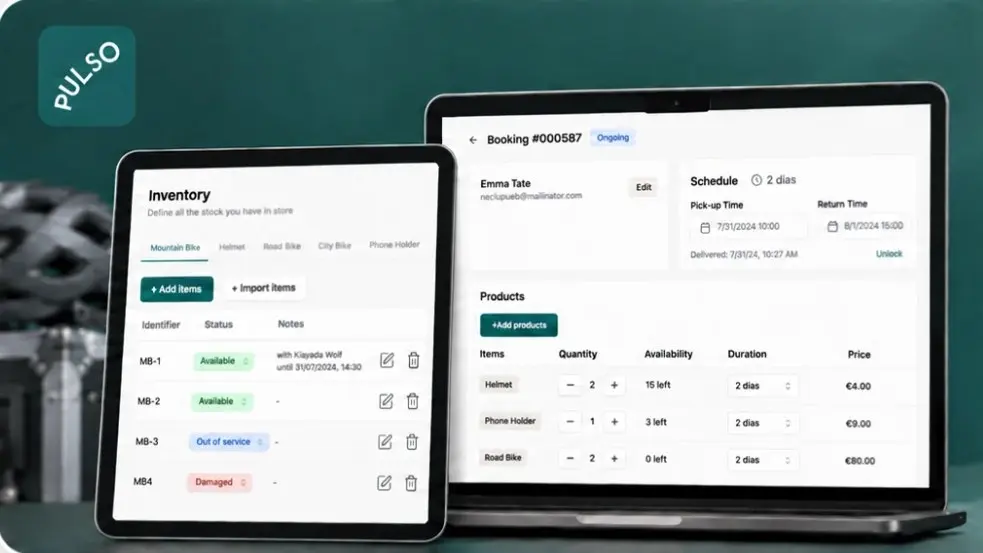
There are three ways operators usually get there. A booking plugin bolted onto a WordPress site, which is cheap and tends to break the week the season starts. Marketplace calendars only, which works until you want bookings that do not carry commission. Or purpose-built rental software with a booking widget on your own pages, which is where most people land by their second season. Pulso is built for that last one, with online bookings from your own site, live fleet availability, digital rental contracts and card payments taken up front. The tool matters far less than the principle, which is that "can I have it from the 12th to the 19th and what will it cost me" needs an answer a customer can reach without waiting for you.
The 12 answers a customer needs before booking
Traffic to a page that cannot take a booking is just a slower way of losing customers. Before a stranger has to message you, they should be able to answer all of this.
- Which vans you have and which are free on their dates
- How many each sleeps, and how many can legally travel in it
- The nightly rate and how it moves with season and length of stay
- What is included: bedding, kitchen kit, chairs, gas, second driver
- The deposit, how you take it and when it comes back
- The mileage policy, in kilometres or unlimited
- The insurance, the excess, and whether a reduction is available
- Who can drive: minimum age, licence held for how long
- Pickup and drop-off location and times, and what happens outside them
- Minimum nights, including any peak-season minimum
- Cancellation and change terms
- Pets, and whether the van can cross a border
Four of those decide more bookings than the other eight combined, and they are the four nervous operators set defensively.
Deposits
The deposit is the biggest silent objection in vehicle rental. A €1,500 hold with no explanation loses every time to a €600 hold with a clear damage policy attached. If you must hold a lot, say in one sentence what it covers and when it is released, and then actually release it on that timescale, because slow deposit returns generate more bad reviews than mechanical faults do. Hold it as a pre-authorisation rather than a charge where you can, and photograph the van at handover and return with the date visible, because that habit ends ninety percent of disputes before they start.
Insurance and excess
Travellers are not comparing policies. They are asking what happens if they scrape a wall in a village with a street too narrow for the van. Give them the excess figure, say whether you sell a reduction and what it costs per day, and list what is not covered, which is usually roof, tyres, windows, undercarriage, water ingress and anything above the windscreen line. Vagueness reads as a trap.
Minimum nights, delivery and cross-border
Minimum nights filters your market whether you meant it to or not. Every extra night removes a slice, so a five-night minimum in June is a decision to have an empty June.
Delivery and airport pickup are conversion features, not favours. Delivery is what makes you bookable for somebody flying in without a car, and it is the mechanism that makes campsite partnerships work. Set a radius and a fee you can live with, publish both, and do not price it so high that people abandon at the final step. Work the fee out properly: return distance, your hourly rate for the round trip, fuel, and the risk of a late return leaving you stranded.
Two more policies quietly expand or shrink your market. Cross-border matters enormously in Europe, where a couple hiring in Málaga will want Portugal, so state which countries the insurance covers and what an extension costs. One-way rentals are harder, since somebody has to move the van back, but offering them on one popular route at a fair repositioning fee wins bookings your competitors turn away without thinking.
Enquiry response: speed, template and who to turn down
Travellers rarely message one supplier. They message three and book whoever comes back first with a clear price.
The evidence outside our industry is brutal on this. Studies of web enquiries across thousands of companies find that contacting somebody within the first hour makes qualifying them several times more likely than waiting even one more hour, and dozens of times more likely than waiting a day. The average business takes closer to two days. Campervan enquiries rot faster than that in peak season, because a specific van on specific dates gets sold while you are out doing a handover.
So build a saved reply that closes rather than opens a conversation.
Hi Tom,
Good news, the Atlas is free from 12 to 19 August. Seven nights at the August rate comes to €945 all in, which covers unlimited kilometres, bedding for two, kitchen kit, camping chairs, a full gas bottle and a second driver.
The deposit is €600 held on a card at pickup and released within five working days of return. The insurance excess is €900, with a reduction available at €12 a night. Pickup is from our yard in Churriana between 9am and 6pm, and we deliver to Málaga airport for €35 each way.
You can book here and the dates hold as soon as the deposit goes through: [link]
Anything I have not covered, just ask.
Ana
Ten seconds to adapt, and it removes every reason to message a competitor. Sending that within the hour beats a beautifully written essay the following morning, every single time.
If you cannot be instant, publish the window instead. "We reply within 12 hours and the calendar below is always live" pushes people to serve themselves rather than sit in silence wondering if you exist. Then count enquiries against bookings every month, because converting fewer than one in five in season is almost never a demand problem. It is response time, or an answer missing from your first reply.
Some enquiries you should lose on purpose. The person asking whether they can pay cash and skip the contract, the twenty-two-year-old asking if the age limit is flexible, the group of nine wanting a six-berth for a stag weekend. Say no politely and quickly. A van off the road for three weeks costs more than any single booking earns.
Reviews and trust when you have neither
No bookings means no reviews, no reviews means less trust, less trust means fewer bookings. Breaking that loop is the whole job in month one.
Use the network you already have, and use it deliberately. Share the van from your personal accounts, post in local camping and caravanning groups where the rules allow it, and email everybody you know. The version that works is never "check out my new business", it is the van, the city, the dates free next month and what three nights costs, because people share concrete things and scroll past announcements. Read each group's rules first, since plenty ban promotional posts and being removed from the one group that matters is a real cost.
Put the van itself to work. It sits in a city getting looked at all day, so put your web address and a QR code on the rear panel, and hand a card with the same code to every customer at pickup. It costs about twenty euros and it works while you sleep.
How to ask for reviews without breaking the rules
You cannot offer payment, a discount, free days or anything else in exchange for a review, and that includes offering something to change or remove a bad one. You also cannot ask only the customers you expect to be happy, which is a real rule and one that plenty of small businesses break without knowing.
What works is simpler than any scheme. Ask everybody, the same way, at the same moment.
Hi Tom, thanks for bringing the Atlas back in such good shape, and I hope Cabo de Gata was worth the drive. If you have two minutes, a review would genuinely help us, since we are still new and people rely on them when they are deciding. Here is the link: [link]. Either way, the deposit is on its way back to your card and you are always welcome next season.
No incentive, no suggestion of what to write, no request to mention anyone by name, no screening. Send it a few hours after drop-off while the trip is still the best thing that happened to them this year, and reply to every review you get, including the lukewarm ones, because those replies are read by everybody deciding later.
Replying to your first bad review
One is coming. Reply inside a day, name the specific thing that went wrong, say what you changed and skip the defensiveness. "You are right that the water pump was noisy, we replaced it the week after your trip, and I am sorry it cost you a night's sleep" does more for the next reader than a perfect average would. Three five-star reviews reads as suspicious anyway. Fifteen reviews with one honest complaint and a good reply reads as a real business.
And collect assets while they are still delighted. Ask at drop-off whether you can use their trip photos, get the yes in writing in the same message, and keep a folder. Two real photos from a real customer outperform any stock image of a van at sunset.
The handover that earns the review
Twenty minutes done well produces reviews and referrals, and this is where most of the trust is actually won. Walk them round the outside pointing out existing marks. Show them the gas, the water, the leisure battery, the heater and the toilet. Make them start the engine and reverse it once before they leave the yard. Give them your mobile number with the honest instruction to call before doing anything they are unsure about. Every operator who does that gets fewer damaged returns and better reviews than the one who hands over the keys and points at a manual.
Partnerships: campsites, activity operators and venues
"Partner with local campsites" is the most repeated and least useful advice in this whole category, because nobody explains why a campsite would care.
Here is why. A campervan renter is a campsite's ideal guest. They book a pitch, stay several nights and spend money on firewood, gas, laundry, showers and beer while they are there. The big platforms have built formal programmes on exactly this logic, paying campgrounds a commission on rental bookings from a referral link and flagging them as recommended delivery locations, because a large share of renters have the van delivered straight to a site. That is the same trade you can run with three vans and an email address.
Who to approach first
Campsites and aires within two hours of your pickup point, especially ones with van-sized pitches and a shoulder season to fill. Then surf schools, climbing guides, kayak and mountain bike operators whose customers would stay four days instead of two if they had somewhere to sleep. Then hostels and small hotels near your airport, who lose the customer the moment they leave town. Then festival and event organisers with an annual accommodation problem, rural wedding venues where guest accommodation is the recurring complaint, and local route bloggers with a genuine audience in your region.
Three deal structures that work
Referral commission suits campsites and activity businesses, where they send bookings and you pay a fixed amount or a percentage per completed rental.
A reciprocal arrangement suits partners who feel awkward about looking commercial, so you recommend them in your welcome pack and on your route pages, they name you when guests ask about van hire, and no money moves.
A bundle of three nights of van plus two nights of pitches at a set price takes longer to build and sticks around far longer once it runs.
The outreach email
Write to a named person, not to info@.
Subject: Sending campervan renters your way in September
Hi Marta,
I run a small campervan rental out of Málaga. Three vans, mostly couples and families doing four to seven nights along the coast.
Every one of them asks me where to stay, and I have been sending people to you already. I would like to make it official, so I will list Camping Cabo de Gata as a recommended stop in the welcome pack every customer gets at pickup, and on our route page for the eastern coast.
In return, if you pass on our details when guests ask about van hire, I will pay €25 for each booking that comes from you. I would give you a code to hand out so we can both see what it is producing.
Happy to come by with coffee one morning this month if that is easier than email.
Ana, Costa Sol Campers, +34 6XX XXX XXX
Three things make that work. It is specific about the customer you are sending them, it gives before it asks, and it proposes a measurable trial rather than a permanent arrangement nobody wants to sign.
Follow up once after five days, two lines, easy to say yes to. Something like "just checking this landed, happy to drop a few cards in this week if it is useful" converts a surprising share of the people who meant to reply and forgot. If the second one goes unanswered, leave it, because a third message costs you the relationship you were trying to build.
Then track it or do not run it. Give each partner a code such as CABODEGATA25 or their own landing page, and record it against every booking. Eight weeks later you will know which two partners are worth your attention and which eight were just coffee.
Social content that leads somewhere bookable
Posting regularly to nobody produces the feeling of having done marketing and nothing else. What produces enquiries is content that answers a planning question somebody already has, ending somewhere they can book.
The full walkthrough video takes three or four minutes, gets filmed once and works forever. Where you sleep, how the kitchen works, where the toilet is, what happens when it rains, how the heater runs overnight. Put it on the listing, the location page and YouTube. It removes half your enquiry questions on its own, which makes it the most useful thing you will make all year.
Route content from your pickup city matches how people actually plan. Three days from Málaga with named stops, real driving times, where you park each night and roughly what it costs. A real customer trip with their photos, their words and their permission gives you the one thing a listing cannot, which is proof from somebody with nothing to sell. A straight cost breakdown for a specific four-night trip covering van, fuel, campsites and food is something almost nobody publishes and everybody wants.
After that come the specifics people search for. Which campsites near you take a six-metre van. What to pack for a week. What pickup morning actually looks like. How the pet setup works. How a family of four sleeps in a two-berth conversion. Where to empty a cassette on a Sunday.
Every one of those ends at a page with prices and availability, not a link in a bio pointing at a homepage. Content that does not connect to a bookable page is a hobby. Expect the channel to move slowly too, because social rarely produces a cold booking for a new operator. It supports the listing, builds the audience you will retarget, and closes people who found you somewhere else first.
Paid ads: when to start and what to measure
Google Ads makes sense when three things are true. Your page already converts the visitors it gets for free, you can measure bookings rather than clicks, and you have specific dates or specific vans to fill.
Search and awareness advertising are different products whatever the platforms tell you. Somebody typing campervan rental Barcelona September has a destination, a month and an intention to transact. Somebody scrolling past a van video at eleven at night has a feeling. Both can become customers eventually, and only one of them converts this week at a price you can afford.
Start narrow, with a handful of exact and phrase keywords combining hire or rental with your city and the nearby airports. Add negatives from day one, because campervan search is full of people who want to buy a van, convert a van, hire a moving van, find a campsite or read about van life. Block buy, sale, for sale, conversion, DIY, self build, jobs, insurance quote, finance, moving and removals before you spend anything, then check the search terms report weekly and keep blocking.
Set up measurement first. Define the conversions that matter, which are a completed booking, a submitted enquiry and a phone call over sixty seconds, then track those and ignore clicks and impressions entirely. Phone calls matter more in this business than most, so use a tracking number rather than guessing.
Then do the maths honestly. If your average booking is €650, you convert one enquiry in eight and enquiries cost €12, you pay about €96 to earn €650 of revenue before costs, which is a trade worth making. If you convert one in thirty it is not, and no amount of bid tuning fixes what is really a page problem.
Give any test a fixed budget and a fixed end date before you start, because ad accounts are extremely good at absorbing money slowly while producing something that looks almost like progress. A few hundred euros over three weeks against one city and one set of dates will tell you what you need to know. If it produces nothing, fix the page rather than raising the bid.
Meta ads do a different job. They rarely produce a cold booking for a new operator, and they work well for bringing back people who visited your booking page and did not finish. Save them for that, once you have enough traffic for a retargeting audience to exist at all.
Tracking where every booking came from
Add one field to whatever you use and fill it in the moment you confirm a booking. Those five seconds are the highest-return admin in the business, because after ten bookings you can stop guessing and start putting your hours where the revenue actually came from. Most operators skip it and spend the whole of year two arguing with themselves about Instagram.
Keep it simple enough to survive August. For every booking, record the date, the customer, the van, the nights, the value, where it came from, and one line about what they asked before booking. Be specific about the source, so Yescapa rather than "marketplace", Google Maps rather than "online", the actual partner code rather than "referral". That last field earns its place faster than you would expect, because after fifteen bookings the same three questions will be staring at you, and those are exactly the answers your listing and your location page are missing.
Once the source data exists, three habits compound on top of it. Ask everybody for a review, same message, same moment, no incentive, no filtering, because twelve honest reviews in three months will do more for your ranking and your visibility than any volume of content. Reward the referrer, which is allowed and is not a review incentive, so an existing customer gets credit on their next rental when somebody they sent completes a trip, and you hand them the code at drop-off. And keep an email list with proper consent, using it twice a year, once when next season's dates go live and once for shoulder-season gaps, because people who tried a van once and enjoyed it are usually planning something longer.
One van versus five: what changes
Everything above holds at any size, but the weighting shifts.
With one van you are selling a specific vehicle, and availability is your only real constraint. The channels that pay are the ones reaching people flexible on dates, meaning marketplaces, your own network, and content that makes this particular van worth choosing over the identical white one down the road. Utilisation decides everything, so a three-night minimum and a pet policy will earn you more than premium pricing ever will.
With three to five vans you start selling a service instead of an object. You can hold one back for last-minute high-value bookings, deliver without cancelling your own week, take a two-van group booking for a wedding or a festival, and still cover the peak weekend when something comes back with a cracked skylight. Direct channels become far more valuable, because a fifth of gross revenue in commission across five vans is somebody's salary. Fixed costs also turn marketplace dependence into a real risk rather than an annoyance, which is why the local search work should start early even though it pays back late.
The break point almost always arrives where manual calendars fail. Two marketplace listings plus direct enquiries plus a partner sending bookings is more than enough to sell one van twice, and Pulso's guide to preventing double bookings covers the mechanics of holding one calendar across channels.
Nine mistakes that kill early bookings
None of these look like mistakes while you are making them, which is why they are worth naming.
Listing on five marketplaces at once and managing the calendars by hand until something collides. Setting a five-night minimum in your first season because turnarounds felt like hard work. Holding a deposit so large that people abandon at checkout, and never finding out that is why. Publishing prices "on request" and losing everybody comparing four vans on a Sunday evening. Launching in June for a season that was decided in April. Answering enquiries when you get a moment instead of within the hour. Offering somebody a discount for a review, which breaks the rules and can cost you the reviews you already earned. Spending on ads before the page converts anyone arriving free. And running a whole first season without recording where a single booking came from, which leaves you starting year two with opinions instead of evidence.
Week-by-week plan for your first ten customers
An acquisition sequence rather than a promise, assuming the vans are legal, insured and ready.
Week one: make the offer bookable. Write the rate card with season bands and minimum nights. Write out the twelve answers above once, because you will reuse them on every page and in every reply for the next two years. Photograph each van properly. Film the walkthrough. Set up availability, deposits, payments and a contract that can be signed digitally. Decide your pet policy, mileage policy, delivery radius and minimum nights now rather than when somebody asks.
Week two: go where the demand is. Publish on two marketplaces, chosen on real demand in your city and on which fee structure suits your price point. Create and verify your Google Business Profile with the right address setup for how you actually operate. Publish one location page per real pickup point with prices, availability and a booking action. Put the walkthrough video on all of them.
Week three: distribute and partner. Share from your personal accounts and in relevant local groups within their rules. Email everybody you know with the specific dates free next month. Contact ten local businesses, ideally five campsites, three activity operators and two hostels or venues, writing to a named person with a trackable code and one follow-up after five days. Stick the QR code on the van.
Week four: read what happened. Count enquiries by source rather than bookings, because bookings are still too few to mean anything. Look at where people came from and what they asked. If three enquiries ask something your page does not answer, fix the page that afternoon. Whatever produced real conversations gets weeks five and six. Whatever produced nothing gets paused rather than given more time.
Weeks five to eight: convert and compound. Deliver rentals that are genuinely good. Ask every customer for a review the same way. Hand every customer a referral code. Add a second location page or a route guide for the destination people keep asking about. Chase the two partners who showed interest and let the other eight go. Only now, with reviews on the board and a page that converts, does a small ads test make sense.
Channel priority order for a new operator
Marketplaces come first for almost everyone. They cost nothing upfront, they reach people already comparing vans for chosen dates, and they can produce an enquiry within days. Your own network and relevant community groups sit right alongside, since they are free, faster still, and where a surprising share of first bookings and first reviews come from.
Google Business Profile is next, costing a couple of hours plus a few weeks of verification and producing some of the highest-intent contact you will ever get, because people searching maps for van hire tend to call rather than browse. Location pages belong in the same week even though they pay back over two to six months, and they are the only channel that eventually gives you bookings with no commission attached.
Partnerships take two to eight weeks and cost either a per-booking commission or nothing at all when reciprocal, and they earn their place filling shoulder season and delivery bookings nothing else reaches. Referrals from customers you already served are the cheapest bookings you will ever get, though they obviously cannot start until you have served somebody. Non-holiday demand from events, production and relocations costs only prospecting time and fills midweek gaps that would otherwise earn nothing.
Instagram and TikTok cost a lot of time, move slowly and rarely produce a cold booking, which is why they belong later, supporting the listing and building the audience you will retarget. Search ads produce traffic immediately and carry very high intent on exact local terms, but they need a real budget and a page that already converts. Meta ads deliver traffic fast and bookings slowly, and their honest job for a new operator is bringing back people who nearly booked.
With one to three vans, no audience and a small budget, the order runs: make it bookable, list on two marketplaces and set up your profile in the same week, distribute through your own network, publish a location page per pickup point, approach ten partners with trackable codes, ask every customer for a review and hand out referral codes from booking one, build content around the questions your enquiries keep raising, then test ads with tracking already in place.
That order is not universal. An operator beside a national park with signed premises should weight local search heavily from day one, while an operator on an industrial estate outside a mid-sized city will lean on marketplaces and delivery partnerships far longer. What does not change is the sequence: bookable first, existing demand second, created demand last.
30, 60 and 90 day checkpoints
Working rules of thumb rather than industry benchmarks, so you can tell a slow start from a broken one.
Day 30. Live listings on two marketplaces, a verified profile, at least one location page with real prices, and enquiries arriving from somewhere. Enquiries matter far more than bookings at this stage. Nothing at all after four weeks in season usually means your price is wrong, your calendar is half blocked, or your listing is missing the photos and floorplan that make people ask.
Day 60. Your first completed rentals behind you, your first reviews on whichever platform earned the booking, and a booking log with a source against every line. You should be able to name the three questions people keep asking, and those should already be answered on your pages.
Day 90. A second booking source beyond the marketplace that carried you, some repeat or referral movement, and enough enquiry data to see which channel converts rather than which one merely sends traffic. If everything still arrives through one marketplace, you do not have a business yet, you have a listing, and the next quarter's work is building the direct channel underneath it.
Turning enquiries into confirmed bookings
Everything above generates interest. Interest becomes revenue only when somebody can check availability, understand the price, sign the contract and pay a deposit without a three-day exchange of messages.
That is what Pulso does for campervan operators: live fleet availability so you never confirm a van that is already out, online bookings from your own site, digital rental contracts, and card payments taken up front. It also gives you one place to record where every booking came from, which is the habit that makes the next twenty cheaper than the first ten. If you are still at the planning stage, start with how to start a campervan rental business over on pulsorent.com.
Frequently asked questions
How do I get customers for my campervan rental business?
Start with demand that already exists rather than trying to create it. List on one or two rental marketplaces, set up and verify a Google Business Profile for your pickup location, and publish a page with real prices, availability and a booking button. Then work your own network and a handful of local campsites and activity businesses. Paid ads and social content come after those work, not before.
Where should I advertise my campervan rental?
For your first ten bookings, the highest-return places are rental marketplaces, Google Maps and local search, and the businesses already serving travellers in your area. Paid advertising works best on high-intent terms like campervan hire plus your city, and only once your booking page reliably converts the visitors it already gets for free.
Should I list on rental marketplaces?
Usually yes, at the start. You get people who are already searching, plus payments, contracts, insurance and a review system, none of which you have to build. The trade-off is commission, direct competition on a results grid, and no ownership of the customer. Use them to fill the calendar and earn early reviews while you build direct bookings underneath, and stay inside their terms while you do it.
How much commission do the marketplaces take?
It varies by platform, country and membership tier, and it changes, so check before you list. Roughly speaking, Outdoorsy publishes host fees from 25% down to 20% by volume, Yescapa charges service fees up to around 15% of the hire depending on cost and registration country, and Camplify splits its charge between an owner commission and a hirer booking fee. Who pays matters as much as the percentage, because a fee charged to the traveller still lands on your total at checkout.
Do I need a website to start renting campervans?
Not for your first booking, since a marketplace listing can carry you through a first season. You need one to stop paying commission forever. At minimum, publish a page per pickup location covering your vans, prices, what is included, deposit, mileage, insurance and a booking action. A page that takes bookings is worth far more than a beautiful site that only takes messages.
What is a booking engine and do I need one?
It is the software that lets a customer pick dates, see whether a specific van is free, get a real price for those dates and pay to confirm without waiting for you. An enquiry form is not the same thing, since it collects a phone number and enters you into a race with whoever replies faster. For campervans it needs per-vehicle availability, seasonal and length-of-stay pricing, turnaround buffers between rentals, a deposit or full payment at booking, driver and licence details, extras like bedding and excess reduction, and a contract that can be signed digitally.
How should I price when I am just starting?
From your own costs, not from the cheapest van in town. Add up what the van costs monthly whether it moves or not, add what each rental costs to turn around, then work out how many nights you need to sell to make it worthwhile. Run at least three seasonal bands, use an introductory rate with a published end date to fill your first ten rentals, and add value rather than cutting the nightly rate when you want to win a booking.
How do I get reviews when I am brand new?
Deliver a few excellent rentals, then ask every customer the same way right after drop-off with a direct link. Never offer a discount, free days or anything else in exchange, and never ask only the customers you expect to be happy, because both break the rules and can cost you the reviews you already have. Ask everybody, do not tell them what to write, and reply to every review including the critical ones.
How far in advance do people book campervans?
Further ahead than most new operators expect. Across Europe the average sits somewhere between fourteen weeks and five months depending on nationality, with Germans and Dutch travellers planning earliest. Your summer calendar is therefore decided in spring, so listings and location pages need to be live at least three to four months before the season you want to fill.
What do I do with the vans in the off season?
Sell longer stays rather than more of them, because one four-week booking costs a single turnaround and beats an empty parking space. Then chase the demand that has nothing to do with holidays: festival and event crews, film and photo production, people between houses during a move, contractors working away, and anyone considering buying a van who would pay to try one first. It will not carry the business, and it fills weeks that would otherwise earn nothing.
Is Google Ads worth it?
It can be, once you can measure bookings rather than clicks and your page already converts organic visitors. Keep it to high-intent local terms, block van sales, conversions and moving-van hire with negative keywords, and set up conversion tracking including phone calls before spending anything. Give the test a fixed budget and a fixed end date. If the page converts poorly, ads only help you lose money faster.
How do I get more direct bookings instead of marketplace ones?
Own the local searches, make the page bookable, and ask for the second booking properly. In practice that means a location page per pickup point, an active Google Business Profile with real reviews, a referral code handed to every customer at drop-off, and an email list you contact twice a year with something genuinely useful. It is slower than a marketplace and it is the only version that ends with you keeping the whole booking.

 Ignasi Castillo