 Ignasi Castillo
Most disputes between an operator and a customer get resolved much faster when there's a signed contract. Without one, any disagreement about damage, theft or the deposit return becomes a conversation with no documentary backing. The contract doesn't prevent problems, but it defines how they get resolved.
This article is part of the Bicycle rental business management guide.
1. Is a contract legally required?
There's no specific legal obligation for bicycle rental contracts in Spain, unlike motor vehicle hire. But that doesn't make it optional in practice.
Without a signed contract, the operator has no legal backing if a customer returns a bike with damage and denies causing it, if the bike isn't returned on time, or if there's an accident and the customer claims the business is responsible. With a contract, you have the bike's condition at handover documented, the conditions the customer accepted, and a framework for resolving any incident.
2. What the contract needs to include
A useful bicycle rental contract covers these elements:
Identification of the parties. Full name and ID number of the renter. For foreign customers, passport number. This is what you need first if you have to chase a bike that hasn't come back.
Description of the bike. Serial number, type, colour and condition at handover. A photo attached to the contract (or in the digital system) is even better. Without this, it's hard to prove that damage was caused by the customer and wasn't there before.
Rental duration. Date and time of handover and expected return. Include what happens if there's a delay: hourly rate for extras, or additional retention from the deposit.
Price and payment terms. Total amount, payment method, and any deposit pending return.
Deposit. Amount, how it's held (cash, card authorisation), and the conditions under which it's retained in full or in part. Specify what type of damage is covered and what isn't.
Renter's liability. The customer accepts to use the bike appropriately, not to hand it to third parties, and to take responsibility for damage through misuse or negligence. Also includes what to do in case of breakdown or accident.
Operator liability waiver. Makes clear that the operator is not responsible for accidents arising from use of the bike, except in cases of proven equipment defect.
3. The problem with paper contracts
A paper contract works when the customer is standing in front of you, there's a pen, the shop isn't packed, and the customer speaks the same language as whoever is handling the rental. During peak season, none of those conditions reliably hold.
Paper contracts are also hard to file, impossible to search if there's a dispute weeks later, and don't let the customer read them before arriving.
4. Digital signing changes the whole flow
With digital signing, the customer receives the contract on their phone before arriving at the shop. They read it, sign it, and when they show up all that's left is handing over the bike. Check-in goes from 10 minutes to under 2.
The contract is also automatically archived linked to the booking. If there's a problem weeks later, you find the document in seconds.
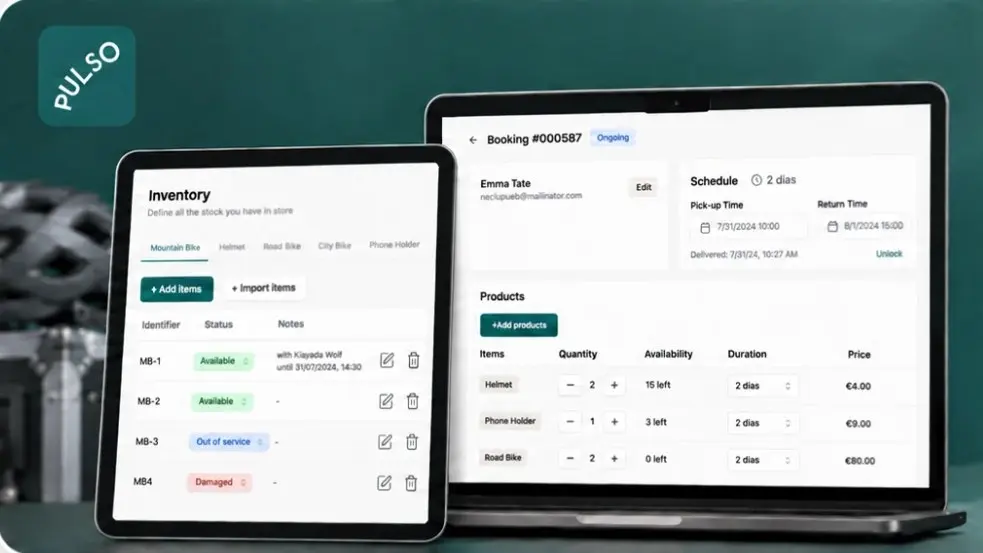
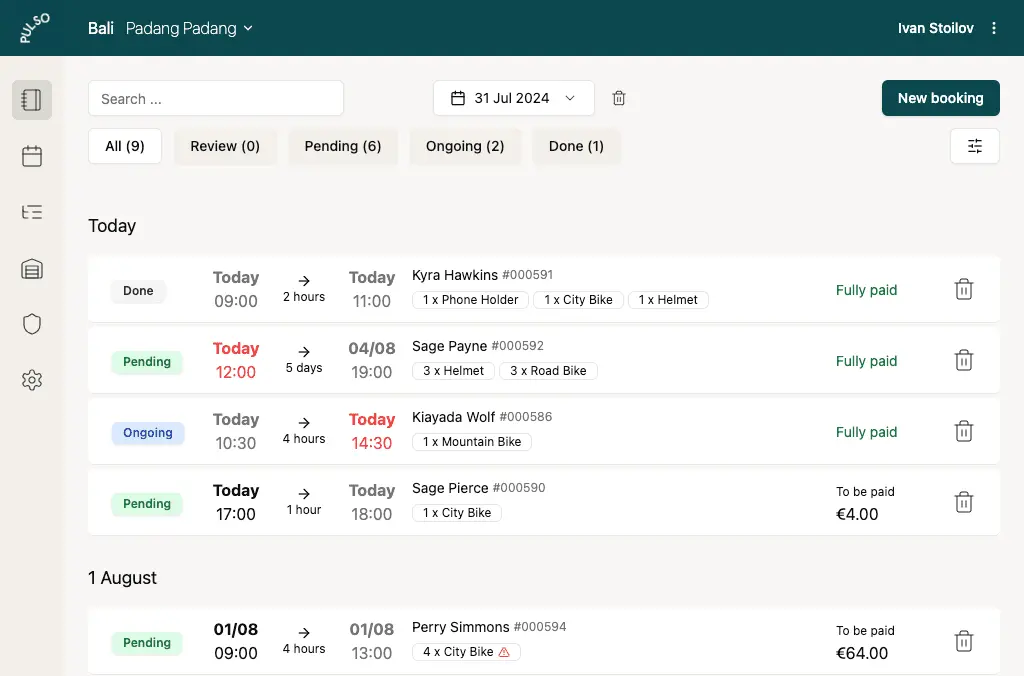
PULSO includes digital contracts with electronic signature on all plans. See all PULSO features or start with a free 14-day trial.
5. The deposit: how to handle it without cash
A cash deposit has an operational problem: you need somewhere to keep it, you have to return it at the right moment, and manage it if there's damage. During peak season with multiple simultaneous rentals, that gets complicated.
The alternative is a card pre-authorisation: an amount is held without being charged, and only executed if there's damage. The customer doesn't need to carry cash, and the operator doesn't have to manage a deposits float.
PULSO handles card deposits without a physical card reader. The customer can leave a deposit from their phone before arriving.
Frequently asked questions
Can I use the same contract for foreign customers?
Yes, but it's worth having a version in English for cases where the customer doesn't understand Spanish. A signature on a document the customer doesn't understand can complicate any later dispute.
What if a customer refuses to sign the contract?
You're entitled not to hand over the bike. The contract is a condition of the rental, not an optional formality. If the customer won't accept it, there's no rental.

 Louis Cousaert
 Ivan Stoilov