















 Anita Valentinova
1. How Your Customers Are Finding You Today
The majority of rental customers — particularly in tourism-heavy markets for motorbikes, bicycles, e-bikes, kayaks, or sports equipment do not arrive through word of mouth, social media, or advertising. They arrive through local search. They are in an unfamiliar place, they have a need, and they reach for their phone.
The search queries that bring these customers to rental businesses are high-intent and geographically specific. "Motorbike rental Gran Canaria," "bike hire Barcelona city centre," "scooter rental near me," "best e-bike rental Lisbon" — these are not exploratory searches. The person typing them has already decided they want to rent. They are choosing between providers in the next few minutes.
A well-optimised Google listing is just as important as a website for many local businesses. It influences how often your business appears in local search, how credible you look to customers, and how likely someone is to call or visit. For a rental business whose customers are almost entirely made up of people who are not local and who are searching right now, that influence is not incidental. It is the primary mechanism through which new business walks through your door.
The search landscape is also changing in a way that makes this more urgent, not less. AI tools — ChatGPT, Google's AI Overviews, Perplexity — are increasingly answering these local queries directly, without sending users to a results page at all. Traditional search shows multiple website options. AI engines provide single responses that synthesise information from various sources. If you are not part of that synthesised response, you are invisible to a rapidly growing segment of searchers who never scroll past the AI's answer.
2. What a Google Business Profile Actually Is and Does
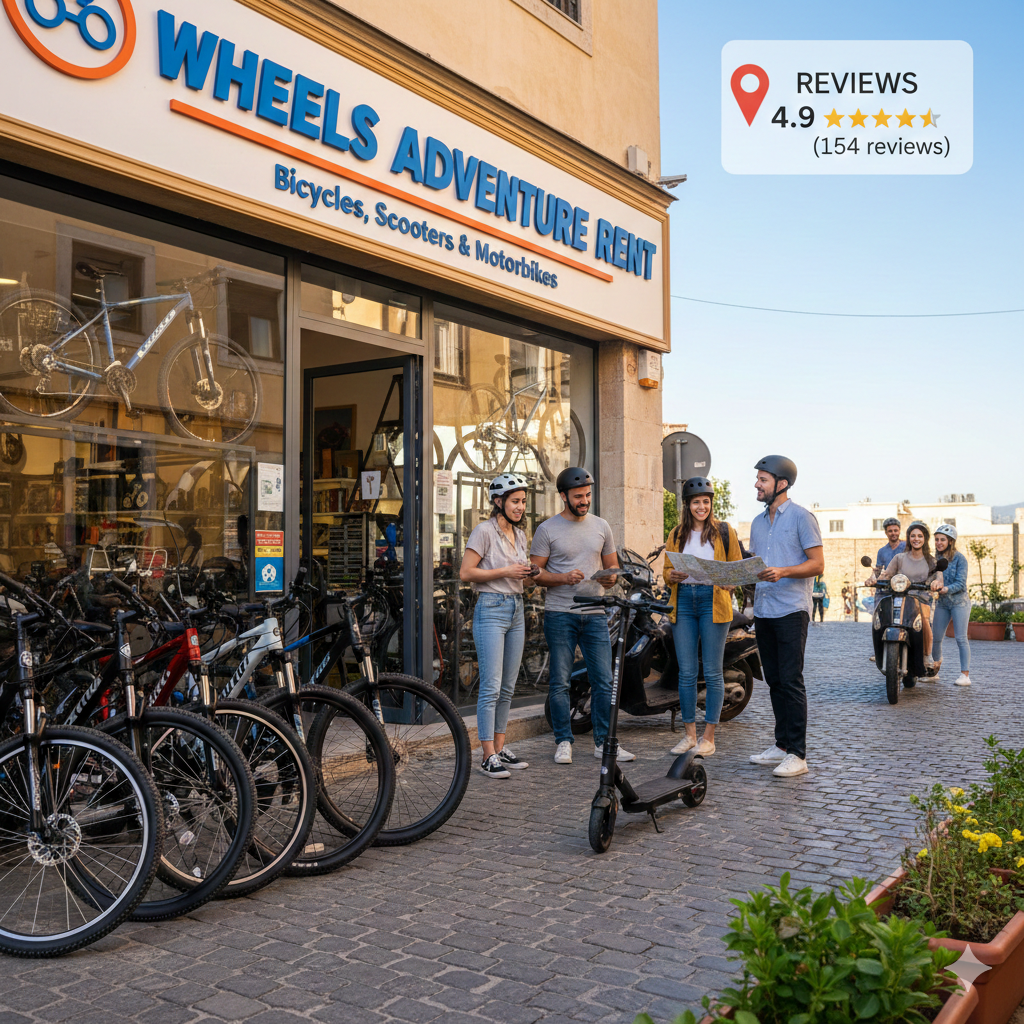
A Google Business Profile (GBP) is a free listing tool that controls how your business appears in Google Search and Google Maps. When someone searches for a rental business in your area, Google's results typically surface three businesses prominently before any website links — in what is known as the Local Pack. These three listings come directly from Google Business Profiles. Appearing in that Local Pack for relevant searches is, for most local rental businesses, the single highest-value marketing action available.
Your GBP controls several things simultaneously:
It determines whether your business appears on Google Maps when customers search in your area, placing you directly in front of people actively looking for what you offer.
It displays your name, address, phone number, opening hours, website link, and photos directly in search results without the customer needing to visit your website first.
It surfaces your star rating and review count prominently, which are among the first signals customers use to decide whether to engage further or move on to a competitor.
It allows customers to call you, get directions, or visit your website in a single tap, reducing the friction between discovery and contact to an absolute minimum.
A verified Google Business Profile receives about 200 interactions per month. For a motorbike or bike rental operation in a tourist area during peak season, 200 monthly interactions from a single free listing represents a significant, recurring customer acquisition channel that requires no advertising spend.
The way Google decides which businesses appear in the Local Pack, and in what order, is increasingly driven by behavioural signals, data accuracy, and content quality — not simply by proximity or category match. A neglected profile is not neutral. It actively costs you rankings.
3. Why Local Rental Businesses Are Uniquely Dependent on Search Visibility
Rental businesses serving tourists, visitors, and travellers are different in almost every structural way. If you are a motorbike rental shop in a beach destination, a bicycle hire company near a city's major tourist sites, or an equipment rental outfit at the base of a ski area, then you follow me now. The vast majority of their customers are people who have never been to that location before, who are planning or executing an activity today or tomorrow, and who are making provider decisions based almost entirely on what appears at the top of a search result.
This creates a specific and powerful dynamic:
- The intent is high — the customer has already decided they want the thing you rent. They are not browsing. They are choosing.
- The **competition is local ** and bounded — there are probably a handful of comparable businesses in your area, not hundreds. The ranking gap between first and fourth place is the gap between a full booking calendar and an empty one.
- The decision window is short — the customer will choose and book within minutes of their search, with no follow-up, no second consideration, and no loyalty to a brand they have never used before.
- The discovery moment is almost entirely controlled by search ranking and profile quality — not by advertising spend, not by social media following, and not by word of mouth from people who are not in that city right now.
Even one small error can mean a lost sale for those in the rental industry. This applies equally to operational errors like double-bookings and to informational errors like an incorrect phone number on your Google profile, a missing category that means you do not appear for a relevant search, or an outdated photo that makes your fleet look older than it is. In a business model where the customer finds you, evaluates you, and decides in a single search session, every element of your digital presence is a conversion factor.
4. The Rise of AI Search and What It Means for Local Rental Operators
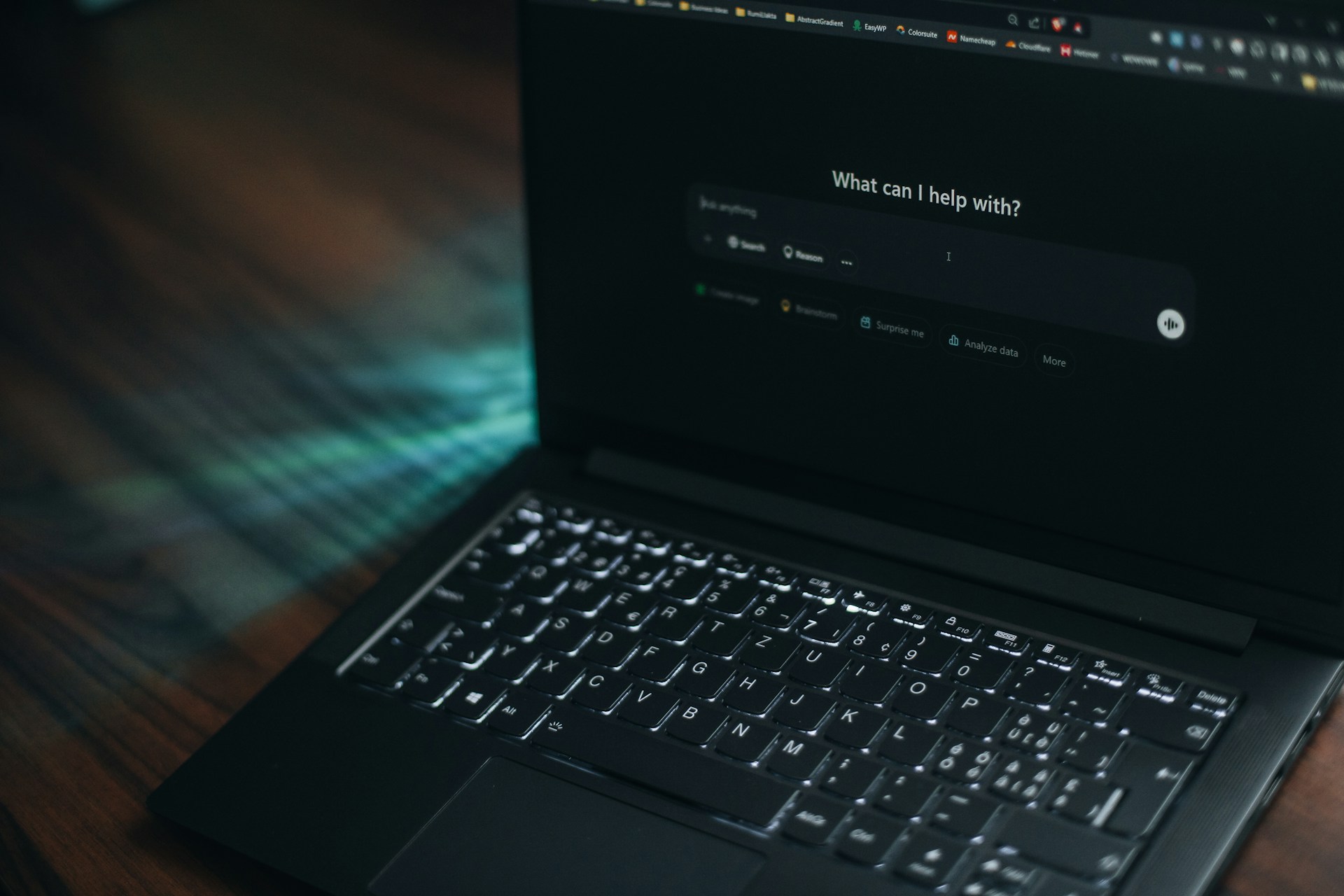
Google's AI Overviews, ChatGPT, Perplexity, and tools like Google's AI Mode are changing how customers discover local businesses in ways that most rental operators have not yet had to think about. Understanding this shift now, while most competitors are unaware of it, is a genuine competitive opportunity.
Between April 2024 and March 2025, the ten most-used AI chatbots saw 55.2 billion visits — an 80.92% year-over-year jump. ChatGPT has 300 million weekly users. Instead of scrolling through results, users ask "Who's the best plumber near me?" and get direct recommendations. If AI does not recommend you, you are invisible to this fast-growing segment. The same dynamic applies exactly to rental businesses. A traveller asking ChatGPT "where can I rent a motorbike in Bali" or "best bike rental in Amsterdam" is looking for a direct recommendation, and if your business is not in the answer, that customer is gone.
AI Overviews now appear in 16% of all Google desktop searches in the United States, fundamentally changing how people find information online. That percentage is growing, and it is not limited to informational queries — it increasingly covers local and commercial intent searches of exactly the type that bring customers to rental businesses.
The key insight for local rental operators is that AI search does not replace the need for Google Business Profile optimisation — it amplifies it. The essential ingredients for discovery are consistency, accuracy, and real-time discovery. With the rise of large language models, the accuracy of business information within these models has become a foundational necessity. A business with complete, consistent, accurate information across all relevant platforms is both more likely to rank well in traditional Google search and more likely to be cited and recommended by AI tools. The two are not separate disciplines. They are the same work producing compounding results across multiple discovery channels.
5. What LLMs Actually Pull From When Recommending Local Businesses

Understanding how AI tools decide which businesses to recommend is the most important new knowledge for any local rental business owner in 2025. The mechanics are different from traditional search in ways that have direct, practical implications for what you need to do.
Large language models like ChatGPT, Perplexity, and Google's AI Overviews do not just crawl your website the way search engines do. They interpret language, infer meaning, and piece together your brand's identity across the entire web. If your local visibility feels unstable, this shift is one of the biggest reasons.
LLMs pull from multiple sources simultaneously, and the source mix varies by platform:
Google AI Overviews heavily favours Google Business Profile listings, meaning your GBP is the primary lever for visibility within Google's own AI results.
ChatGPT uses Bing's index rather than Google's, and pulls a significant portion of its local business data from Foursquare — a platform most rental operators have never considered.
Perplexity relies heavily on Yelp, TripAdvisor, and open directory sources, making multi-platform review presence essential for visibility in its recommendations.
All LLMs without exception use directories and citations across every industry, meaning platforms like MapQuest, Yelp, and local aggregators remain highly relevant in the AI era.
Business websites remain the single most-cited source across all LLMs and all industries — your own site is still the most authoritative signal available to you.
If your name, address, phone number, hours, or business description differ between platforms, AI detects inconsistency and becomes less confident referencing you. This is the concept of NAP consistency — Name, Address, Phone — and it is one of the most practically important things a local rental business can manage. An inconsistent phone number across Google, Yelp, and TripAdvisor is not a minor admin problem. It is a signal to LLMs that your information may be unreliable, which reduces the likelihood of recommendation.
The vast majority of sources across every single LLM and industry were businesses' own websites. This finding really highlights just how critical it is to have your own, well-maintained website. Your website serves as the ultimate authoritative source for LLMs seeking the most accurate and complete information. For a motorbike or bike rental business, this means your website needs to clearly describe what you rent, where you are located, what your pricing looks like, and what the booking process involves — structured in a way that an AI can interpret and extract confidently.
AI search is developing faster than any other technology in the last decade. Those who optimise for AI models first will gain a significant advantage when AI becomes the primary search channel.
6. The Key Elements of a High-Performing Rental Business Profile
A complete Google Business Profile is not the same as a populated one. Many rental businesses have a profile with a name, address, and phone number that was set up years ago and has not been touched since. That is not a functioning profile — it is a digital placeholder that is actively underperforming relative to competitors who treat their profile as a live operational asset.
Here is what actually determines profile performance for a rental business:
Business category selection. Your primary category should be as specific as possible. A motorbike rental business should not use a generic "vehicle rental" category when a specific "motorcycle rental agency" or "scooter rental service" category exists. Secondary categories should cover related services — if you also rent bicycles or e-bikes, those should be selected explicitly. Use the most specific category available and select all your services without adding unrelated ones. Category selection directly influences which search queries your profile appears for.
Complete and current business information. Every field in your profile should be filled in accurately and kept current. This includes your exact address, your primary phone number, your website URL, your operating hours including seasonal variations and holiday closures, and a detailed business description that uses the natural language your customers use when searching. Regular posts, updated hours, and photos keep your profile active in Google's algorithm. Stale profiles signal to Google that the business may no longer be active, which suppresses ranking.
High-quality, current photography. For a rental business, photography is not decorative. It is a primary conversion signal. Potential customers want to see the actual condition of your fleet before they commit to booking. Photos of your motorbikes, bicycles, or equipment — clearly showing current models in good condition — build trust in a way that no amount of descriptive text can replicate. High-quality, up-to-date imagery is critical to attracting customers and improving user engagement with your profile. Show your actual bikes, your actual helmets, your actual storefront. Authenticity is what converts.
Services and products listings. Google allows you to list specific services and products within your profile. For a rental business, this is an opportunity to list each vehicle or equipment category you offer with descriptions, pricing ranges, and individual photos. This content is indexed by Google and provides additional signals about what your business offers, which improves your appearance in more specific search queries.
Q&A section management. Google allows anyone — including customers — to add questions to your profile, and anyone to answer them. Left unmanaged, this becomes a source of inaccurate information. Actively managing your Q&A section by seeding it with the questions your customers actually ask — about deposit requirements, minimum age, licence requirements, helmet provision, delivery options, and booking process — converts your profile from a listing into a pre-sales tool that answers objections before customers even contact you.
Google Posts published regularly. Google allows businesses to publish posts directly to their profile, which appear in search results and on your profile page. Seasonal offers, fleet updates, local event tie-ins, and operational announcements posted regularly signal to Google that your business is active and relevant. Google's AI can now interpret profile content for its AI-generated summaries, meaning a consistent flow of fresh, structured content increases your trust signals and the quality of how your business is represented in AI-driven results.
7. Reviews: The Signal That Drives Both Google Rankings and AI Recommendations
Reviews are the single most influential element of your local search presence, and they work differently than most rental operators assume. They are not simply reputation management. They are a primary algorithmic ranking signal for Google, and they are one of the most important signals that LLMs use when deciding which businesses to recommend.
Google's local ranking algorithm factors in review count, review recency, average star rating, and review response behaviour when determining which businesses appear in the Local Pack and in what order:
Volume outweighs perfection. A business with 400 reviews averaging 4.7 stars will almost always outrank a business with 40 reviews averaging 4.9 stars, because volume and recency signal sustained customer activity to Google's algorithm.
Recency matters as much as quantity. A burst of reviews from two years ago followed by silence signals a declining or stagnant business. Consistent, ongoing review generation is what the algorithm rewards.
Response behaviour is a ranking signal. Responding to reviews — both positive and negative — signals to Google that your business is actively engaged with its customers, which is a behavioural trust signal that directly influences ranking.
For AI platforms beyond Google, the review picture is more complex and more important than most local business owners realise:
ChatGPT does not have access to Google Reviews. To appear in ChatGPT recommendations, you need reviews on open platforms like Yelp, TripAdvisor, BBB, and Facebook.
Perplexity uses Yelp in every single industry it searches, making a well-maintained Yelp profile essential for any rental business that wants AI visibility beyond Google.
A rental business with 500 Google reviews and no presence on TripAdvisor is effectively invisible to a large portion of AI-driven recommendations, regardless of how strong its Google ranking is.
The content of reviews also matters, not just the count. When customers leave detailed reviews that mention specific aspects of your service — the condition of the bikes, the ease of booking, the quality of the helmets provided, the helpfulness of staff — those reviews contain the natural-language signals that both Google's algorithm and LLMs use to understand what your business does and how well it does it. Customers who leave detailed, specific reviews are, without knowing it, creating content that improves your search visibility. This is why the quality of your rental operation — how professional the checkout process is, how well-maintained your fleet is, how responsive your team is — has a direct line to your Google ranking and your AI recommendation rate. Excellence in operations creates the conditions for excellent reviews, which creates the visibility that brings more customers.
8. How Pulso Connects Operational Excellence to Online Visibility
There is a direct and often overlooked connection between how well your rental operation runs and how well you perform in search. This connection runs through reviews, and reviews are driven by customer experience, and customer experience is driven by operational quality.
A customer who books easily, receives their bike or equipment exactly as described, is checked in efficiently with clear documentation, returns the rental without billing disputes, and is followed up with a professional thank-you message is a customer who is highly likely to leave a positive, detailed review. A customer who was double-booked, received equipment in poor condition, waited while staff sorted through paperwork, or disputed a charge because the return date was logged incorrectly is a customer who either leaves a negative review or leaves no review at all — both of which are bad for your search visibility.
Pulso manages the operational layer that creates the conditions for positive reviews:
Accurate real-time availability means customers never show up to find their booking was given to someone else — the single most damaging experience a rental customer can have.
Automated invoicing from verified rental data means there are no billing surprises at checkout, removing the most common source of end-of-rental friction and disputes.
Built-in contract management means the customer-facing process is professional and frictionless from the moment of booking through to return, reinforcing confidence in your operation at every step.
Maintenance scheduling means the bike or equipment the customer receives is in the condition they were shown online, which is the baseline expectation every customer arrives with.
Beyond operational quality, Pulso's booking and customer data gives you the infrastructure to systematically request reviews from satisfied customers at the right moment — immediately after a completed rental, when the experience is fresh. Most rental businesses leave this entirely to chance. A systematic approach to review generation, built into the workflow that Pulso manages, is how you go from a profile with 40 reviews to one with 400 — and that difference is the difference between appearing in the Local Pack and not appearing at all.
Google's algorithms are becoming smarter, focusing on user behaviour, reviews, and data accuracy. Each of those three signals — user behaviour, reviews, and data accuracy — is something that a well-run rental operation, supported by the right management platform, directly influences.
9. The Practical Action Plan: What to Do Starting This Week
Understanding the landscape is useful. Acting on it is what generates customers. Here is a prioritised, practical sequence for a rental business that wants to improve its search and AI visibility:
Claim and verify your Google Business Profile if you have not already. If your business does not have a verified GBP, you may have a default listing created by Google from public data, which is incomplete and uncontrolled. Claiming and verifying your profile takes it under your management and allows you to control every element.
Audit your existing profile for completeness and accuracy. Go through every field systematically. Confirm that your address is formatted correctly and matches your website exactly. Verify that your phone number is current. Check that your operating hours are accurate including seasonal variations. Confirm that your website URL is live and loads correctly. Select the most specific primary and secondary categories available for your business type.
Upload at least 20 high-quality photos showing your actual fleet, your physical space, and your team in operation. Update these photos at least twice a year. Remove any photos that show equipment that is no longer in your fleet or that makes your operation look less current than it actually is.
Build your presence on the directories that AI tools pull from. At minimum, this means creating or claiming listings on Bing Places, Yelp, TripAdvisor, Foursquare, and Apple Business Connect. Ensure that your name, address, and phone number are identical across every single platform. Inconsistency is the most common and most damaging error in local AI visibility.
Establish a systematic process for requesting reviews. Do not leave reviews to chance. Use your operational data to identify satisfied customers and send them a direct link to your Google or TripAdvisor profile within 24 hours of their rental ending. Aim for a minimum of 5 new reviews per month to signal consistent activity to search algorithms.
Respond to every review you receive within 48 hours. A simple, professional thank you for positive reviews and a calm, factual response to negative reviews signals to both customers and algorithms that your business is active, professional, and engaged.