 Anita Valentinova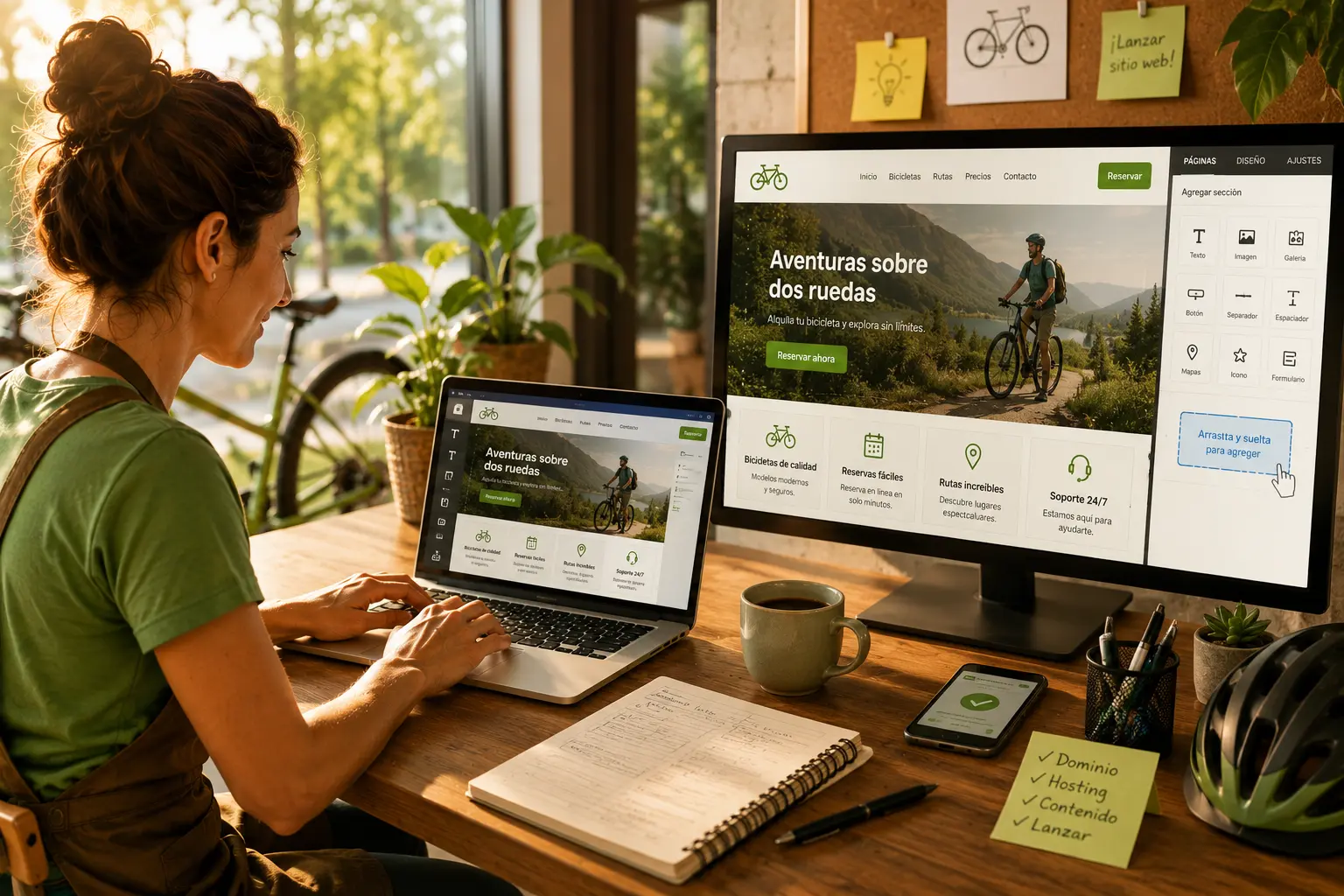
Having online bookings isn't the same as having a website. The website can exist, look good, and receive zero real bookings because it doesn't have the right system integrated. What makes a booking page actually work is what happens underneath: real-time availability, payment, and contract. Without those three things together, the online channel creates more work than it saves.
This article is part of the Bicycle rental business management guide.
1. The actual problem with not having online bookings
A meaningful share of tourists decide what they're doing the following day from their hotel room, at 9pm. They search on their phone, look at options, try to book. If your business doesn't let them confirm at that moment, they move to the next result.
International customers have an extra obstacle. Calling in a language they don't speak confidently isn't how they want to book a bike. An online booking process in English, without phone calls, removes that friction.
And from the operational side, every booking that arrives already confirmed and paid before the customer shows up is time your team doesn't spend on manual management. During peak season, that adds up.
2. What a booking system actually needs
A contact form isn't a booking system. Neither is an email with a PDF calendar. A real system needs three things working at the same time.
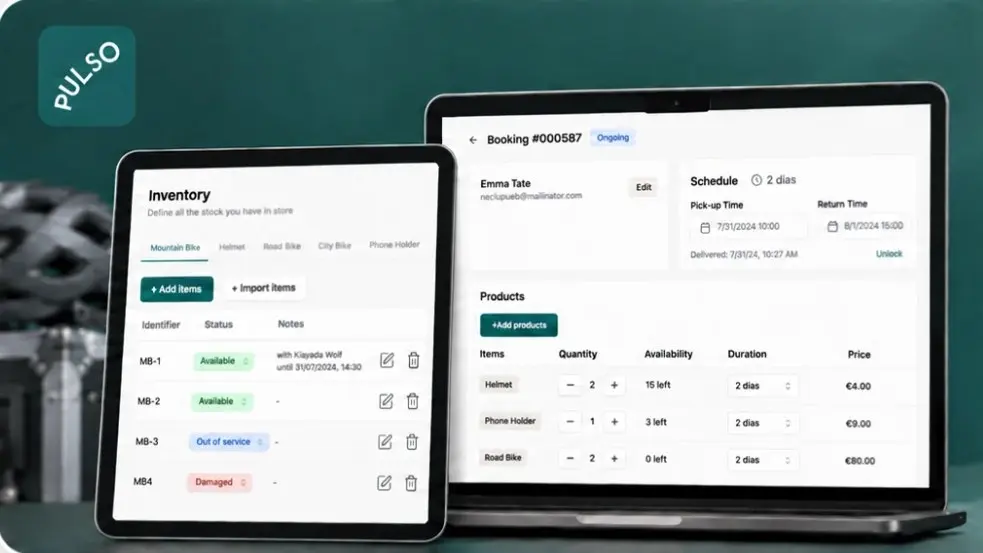
First, real-time availability connected to your inventory. The customer needs to see which bikes are free for the date they choose, and that data has to come from your actual inventory. Without that connection, you end up confirming bookings for bikes that are already out.
Second, payment at the time of booking. A booking without payment is an intention, not a commitment. Customers who pay when they book show up. Those who only leave their name, much less reliably. Payment can be the full amount or a deposit, but there needs to be a real transaction.
Third, a digital contract the customer signs before arriving. When the booking is confirmed, the system sends the contract to the customer's email. They sign it from their phone. When they show up at the shop, check-in takes under 2 minutes. Without that step, the online system speeds up the booking but not the handover.
3. What the page needs
The booking page doesn't need to be elaborate. It needs to work well on mobile, be fast, and have the minimum steps between "I want to book" and "booking confirmed".
The date and duration selector comes first. The customer picks when and for how long, and the system shows which bike types are available for that window. If you have conventional, electric and MTB, the customer chooses which they want, each with its own price and availability.
Before paying, the customer sees a clear summary of what they're booking and the total cost. Then they pay by card or QR. Then they get a confirmation with the contract attached and the pickup information.
Elaborate design isn't needed. What reduces conversion is friction: unnecessary steps, confusing information, or having to wait for manual confirmation.
4. Where to integrate it
There are three ways to have active online bookings and they don't exclude each other.
A widget embedded directly in your website converts best. The customer doesn't leave your page to book. If you already have a website, it's the cleanest option.
If you don't have a website or want something faster to set up, PULSO generates a branded booking page you can link from Google Business Profile, Instagram, or a QR code in your shop. The customer arrives, sees availability, books and pays without you needing to configure anything additional.
External platforms like Viator, GetYourGuide or TravelandRent generate visibility, especially early on. They charge commission per booking (typically 15%–25%). Useful to start with, but every booking that comes through your direct channel keeps 100% of the margin.
5. Getting found: local SEO
The booking system is useless if nobody reaches the page. Most traffic for a local rental business comes from Google Maps searches.
When someone types "bicycle rental Málaga" or "bike hire Barcelona" into Google, the results that appear first are businesses with complete, up-to-date Google Business Profiles with recent reviews. Not necessarily the oldest or largest.
The highest-impact actions: a complete profile with real photos, current opening hours and a direct link to the booking system, plus reviews from real customers from day one. With 20-30 positive reviews, local rankings shift visibly.
Website SEO helps over a longer horizon, but for immediate-intent searches (tourist looking for a rental today), Google Maps is the most direct channel.
6. Three numbers that tell you if it's working
Once the system is live, three metrics show whether it's performing.
The conversion rate from visits to completed bookings. For a tourism rental page with a good system, between 5% and 15% of visits end in a booking. Below 3%, there's friction somewhere in the process.
The percentage of bookings arriving outside opening hours. With the system genuinely active, a meaningful share of bookings should come in between 8pm and 10am the next day. If you're getting none in that window, either the system isn't running 24 hours, or not enough traffic is reaching it.
Check-in time. With the contract signed before arrival, it should be 2 minutes or less. If it's still long, the digital signing process isn't working as expected.
PULSO includes online bookings, digital contract, integrated payment and real-time inventory on all plans from €29/month. When you register you can book a free onboarding session where a real person sets everything up with you in 20 minutes.
Frequently asked questions
Do I need my own website to have online bookings?
No. PULSO generates a branded booking page you can link from Google Business Profile, Instagram or a QR code in your shop. If you already have a website, you can embed the widget directly.
Does the customer need to install any app to book or sign?
No. Everything happens in the mobile browser. The customer gets a link, opens the page, books, pays and signs the contract without installing anything.
Can I still take bookings by WhatsApp or phone?
Yes. Bookings that come in through those channels get entered manually in the system and inventory updates the same way. The online channel complements the others, it doesn't replace them.
How does the cancellation policy work?
PULSO lets you configure the terms: free cancellation up to X hours before, deposit retention with less notice. The system applies the policy automatically.
 Ivan Stoilov