 Louis Cousaert
This article is part of the Bicycle rental business management guide for Spain.
1. The direct channel: the most profitable lever
Every booking that comes through Viator, GetYourGuide, or any OTA carries a commission. Depending on the platform, between 15% and 25% of the sale price goes in commission.
A customer who books directly through your website pays the same but you receive 100%. The margin difference is significant at the scale of a full season.
The direct channel requires upfront investment (a website with integrated booking system, local search presence), but the cost pays back quickly if direct booking volume increases by even 20–30%.
2. Online bookings outside opening hours
A meaningful share of tourist bookings are made at night, when people are already at the hotel planning the next day. If you don't have an online booking system, those bookings are lost or go to the competition.
With a booking system active 24 hours, you capture that demand with no additional effort. The customer sees availability, picks date and time, pays, and gets confirmation. No involvement from you.
This is especially relevant for international customers, who prefer not to call on the phone in a language that isn't theirs.
3. Upselling: what else the customer can buy
The moment the customer is confirming their booking (or picking up the bike) is the best time to offer something extra. The options with the best conversion rates:
Accessories: water bottle holders, helmets, panniers, child seats. Low-price purchases that many customers accept without thinking too hard.
Routes: a local route map, access to a GPS navigation app, or a guided route. They add value to the experience and differentiate your business from those that only rent the bike.
Damage cover: a small additional fee to cover accidental damage during the rental. Many customers take it for peace of mind.
4. Local visibility: Google Maps and search
Most tourists looking for bike hire in your area search on Google Maps or type "bicycle rental [city]". If your business doesn't appear in the top results, you don't exist for that customer.
The two most direct actions are: having a complete and up-to-date Google Business Profile (photos, hours, description, booking link), and getting real reviews from satisfied customers. A business with 50 positive reviews appears above one with no reviews, even if it's older.
5. Group bookings and referral partnerships
Groups (school trips, corporate outings, cycling clubs) are volume bookings that fill multiple slots at once. They require specific pricing and coordination, but the margin per booking can be better than individual rentals.
Partnering with hotels, tourist apartments or local agencies that recommend you to their customers is another channel. A clear referral fee paid promptly keeps the relationship working.
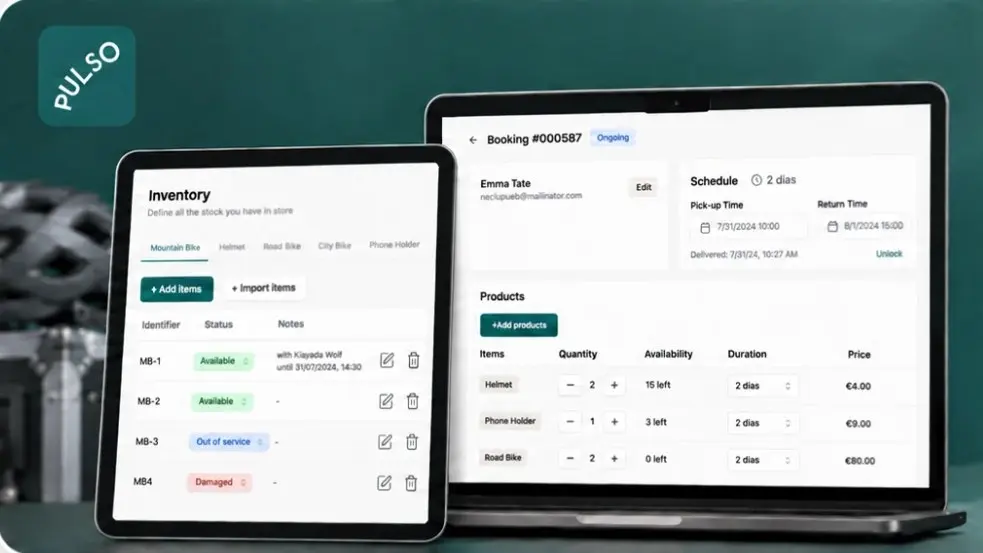
With PULSO you can manage online bookings, groups, and revenue tracking from the same dashboard. See what PULSO includes or get started free.
Frequently asked questions
Is it worth being on Viator or GetYourGuide?
For gaining visibility at the start, it can be useful. For an established business, the goal should be reducing dependence on these platforms and growing the direct channel. The commission you pay on each booking is margin you're leaving on the table.
How many reviews do I need to rank well on Google?
There's no exact number, but going from 0 to 20-30 positive reviews has a visible impact on local ranking. Recency also matters: recent reviews carry more weight than old ones.
Can I offer guided routes without being a certified guide?
It depends on the regulations in your region. In some areas, paid guided tours require a tourism guide qualification. Check before offering it as a service.

 Ignasi Castillo