 Anita Valentinova
This article is part of the Bicycle rental business management guide.
1. The actual problem with seasonality
A coastal rental business can have between 4 and 6 months of real activity. In that period it concentrates almost all of its annual revenue. The rest of the year, fixed costs keep running.
The premises rent doesn't stop in October. Fleet insurance is paid annually. Self-employment contributions are monthly. Management software too. If you have an employee, their contract doesn't disappear in November.
Adding up those annual fixed costs and dividing by the months of active season gives you the real monthly cost that each active month needs to cover. That number is the starting point for any pricing decision, not the rate the shop next door charges.
A concrete example: if your annual fixed costs are €20,000 and you have 5 months of meaningful activity, each season month needs to generate at least €4,000 just in fixed costs before any margin appears. With 15 bikes at €20/day and 60% occupancy, you're at €5,400/month. The difference is the margin available for unexpected costs, maintenance, and profit.
If that calculation doesn't close, either the price or the occupancy needs adjustment before the season opens.
2. How to build a rate structure by duration
Rates need to reflect the actual behaviour of your customers. In a passing tourist destination, most rentals are half-day or full-day. In cycle tourism areas with multi-day routes, the weekly rate carries more weight. In a city with local clientele, the hourly rate may be the most frequent.
Before setting rates, track one month of operation and note the most common rental duration. If 70% of your customers rent for a full day and your daily rate is too low, you're leaving margin behind on every one of those transactions.
An indicative reference for tourist destinations in Spain:
1 hour: €5–€10. Half day (4h): €12–€20. Full day: €18–€35. Week: €70–€120.
These vary significantly by location. In Mallorca, San Sebastián or central Barcelona, prices are higher. In lower-footfall areas, lower. Electric bikes justify 50%–100% above conventional.
The ratio between daily and weekly rates also matters. If the weekly rate equals 4 days, the customer has no incentive to commit to 7. If it equals 7 days, they'll rent day by day to stay flexible. The usual practice is to price the week at the equivalent of 4.5 to 5.5 days.
3. Differentiated rates by time of year
A flat price throughout the season leaves revenue uncaptured on high-demand days and doesn't attract customers on slow days. The solution is having at least two or three rate tiers based on the time of year.
Peak season (July and August on the coast, Easter week, national bank holiday weekends): maximum rates. Demand exceeds supply in many destinations, and the customer will pay more. This is when margin per rental is highest.
Mid-season (June, September, October on the coast; winter in mountain ski areas): standard rates. The customer exists but has more options and more time to compare.
Low season: reduced rates or specific promotions for groups, local events, or scheduled cycle tourism. The goal isn't to cut the base price but to activate different channels and formats (group bookings, agreements with cycling clubs, packages with accommodation) that generate volume where there's no spontaneous tourist demand.
Setting those three tiers in the management software before the season starts avoids making manual adjustments every week during it.
4. Dynamic pricing within peak season
Within peak season, not all days are equal. A Saturday in August at a coastal destination is different from a Tuesday in August. An October bank holiday weekend is different from an October Monday.
Dynamic pricing lets you raise the rate on days of expected high occupancy without touching the rest. No complex system is needed: it's enough to set specific dates in the software (weeks of maximum demand, local holidays, known events in the area) with a rate above the standard.
The practical result is that on the 15-20 highest-demand days of the year, each rental generates more margin without any additional effort. That accumulated increment can represent 8%–15% of total season revenue.
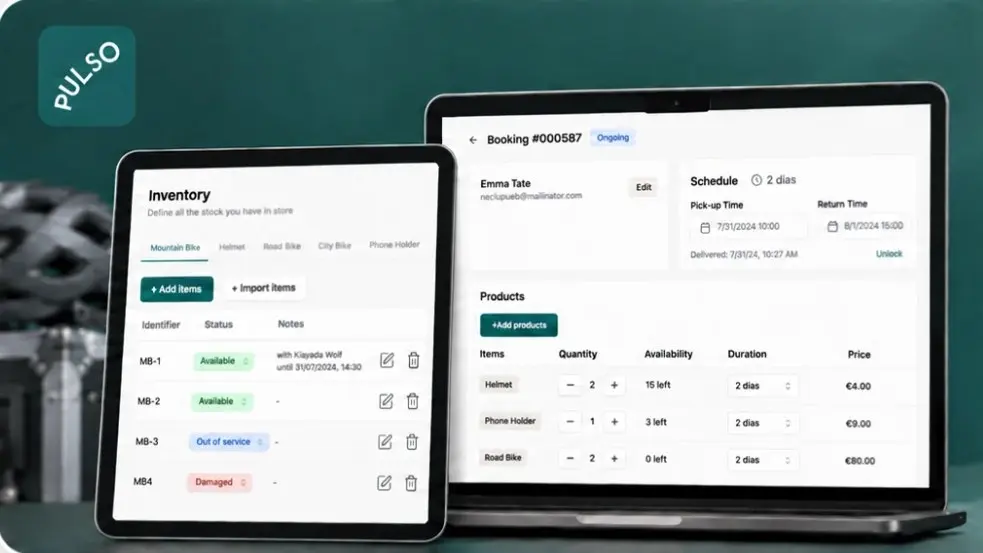
PULSO lets you configure rates by date range, bike type and duration from the management dashboard. No manual changes needed during the season.
5. What to do (and not do) in low season
The temptation in low season is to cut the price and see if anything comes in. It rarely works. If there's no tourist demand in your area in November, dropping from €20 to €15 won't generate the volume you need to cover costs.
What can generate revenue in low season are different formats from individual rental. Rental to cycling clubs for group training sessions. Agreements with local companies for team-building activities. Packages with rural accommodation for cycle tourism weekends. Monthly rental to residents who don't want to buy a bike.
None of those formats is as profitable per unit as a tourist rental in August. But they contribute to reducing the net cost of low-activity months without destroying the base price you need to maintain for the next season.
6. The calculation to do before each season opens
Before setting prices for each season, the minimum exercise is this:
Total annual fixed costs (premises, insurance, software, self-employment, base maintenance): X€. Months of real activity: N. Monthly cost to cover per active month: X/N. Estimated number of rentals per month in active season: A. Minimum price per rental to cover fixed costs: (X/N) divided by A.
Any rate below that minimum doesn't cover costs. The margin above it funds profit, unexpected expenses, and investment in fleet or improvements.
That number changes each year. If premises rent goes up, if active season months decrease, if you add more bikes with their associated maintenance costs, the minimum price rises. Recalculating before each season is a habit that protects margin.
See what PULSO includes or get started free.
Frequently asked questions
When does it make sense to raise prices compared to the previous year?
When fixed costs have risen (inflation, premises rent increase, new fleet units added) or when last year's peak season occupancy was so high you were turning customers away. If you were at 95% occupancy every day in July and August, your price was below what the market would accept.
How do external platforms (Viator, GetYourGuide) affect pricing strategy?
If you sell on platforms charging 20–25% commission, the price the customer sees already includes that commission in your margin calculation. The net price you receive is what needs to exceed your minimum cost. If it doesn't, that booking is costing you money even though it looks like a sale.
Does it make sense to offer early-booking discounts?
Yes, with a limit. A 10% discount for bookings more than 30 days ahead can help fill mid-demand weeks before peak season starts. The limit is not applying it to maximum-demand dates where you don't need an incentive to fill.
How do I price large groups?
A 10–15% discount for groups of 5 or more makes operational sense: less management time per unit, a guaranteed block of availability. Fix it as written policy and don't negotiate it booking by booking. Verbal agreements without a clear price create disputes.